
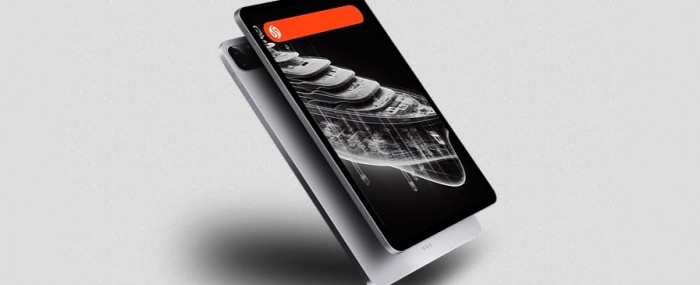
Active thermography enables non-destructive testing of materials
10 de março de 2026By Roseli Andrion | FAPESP Innovative R&D – Imagine an airplane wing or the hull of a yacht. While the surface appears flawless, polished, and robust on the outside, there may be microcracks, air bubbles, or moisture infiltration in layers invisible to the human eye. These invisible differences can mean the difference between a smooth flight and a catastrophic accident.
Until recently, ensuring this level of safety required destroying parts in order to analyze their interiors. The Brazilian aerospace industry needed a more efficient solution. The answer came from Subiter, a startup founded at the Technological Institute of Aeronautics (ITA) in São José dos Campos in the state of São Paulo. Led by mechanical engineer Eduardo Novais, the company developed a solution using active thermography, a non-destructive inspection method that uses heat and infrared cameras to see inside materials. This solution was developed with support from FAPESP’s Innovative Research in Small Businesses Program (PIPE).
The company’s name reflects this essence: “subter,” in Latin, means “that which lies beneath.” “Our slogan is ‘reach the invisible,’” says Novais. “We’re the only company in the Southern Hemisphere to use this technology to make visible what previously required cutting, radiation, or long hours of inspection,” he says.
Non-destructive testing allows for the evaluation of material integrity without damaging the materials. This approach is crucial in industries where internal defects can have serious consequences. In the aerospace industry, for example, a structural defect can develop into a critical problem during a flight. The same applies to ship hulls, train structural components, and wind turbine blades, all of which are subjected to continuous stress.
The concept is pure physics: a part is heated in a controlled manner while an infrared camera monitors how the heat returns to the surface. When the material is homogeneous and intact, the heat dissipates predictably. However, if there is an internal flaw, such as delamination, voids, or discontinuities, the heat flow changes and the infrared reveals this irregularity. Subiter’s software analyzes these variations and diagnoses the condition of the part.
The technology is especially valuable for composite materials – those formed by combining two or more materials to create lightweight, strong structures – such as carbon fiber and fiberglass. These materials are used in aircraft fuselages, yacht and motorboat hulls, wind turbine blades, and other high-performance structural components.
The old world of inspection
For decades, industrial inspection has faced significant limitations. On high-speed production lines, such as in the automotive industry, the most common procedure is destructive sampling testing, in which some parts from the batch are removed, cut, and analyzed. Statistical analysis is then applied to infer the quality of the entire batch.
This method has obvious weaknesses. In addition to the waste caused by destroying parts, it does not guarantee that the units that go to market are defect-free. “You destroy new parts, but the ones that go into vehicles aren’t evaluated,” explains Novais. “It’s flawed sampling.”
Ultrasound and industrial radiography are classic non-destructive testing methods that emerged as an alternative. Ultrasound requires a highly qualified operator to manually touch the part with a sensor and coupling gel. This method is reliable, but it is slow and expensive and requires meticulous surface preparation. Additionally, qualified professionals can earn up to BRL 20,000 per month, whereas active thermography inspectors can be hired at more affordable rates.
Industrial radiography uses ionizing radiation to penetrate materials and form internal images. Despite its precision, the equipment is expensive, poses health risks to operators, limits the volume of work, and presents logistical challenges with large-scale parts.
The global non-destructive testing market is steadily growing, driven by the pursuit of safety, efficiency, and waste reduction. As composite materials advance and structures become larger and more complex, fast, safe, and digital methods, such as active thermography, are becoming more prominent.
Technological leap
Active thermography emerges as a complementary – and often more efficient – alternative. One advantage is that the entire process occurs without physical contact with the part, ensuring neither the integrity of the material nor the operator’s health is compromised. Furthermore, it is possible to inspect areas spanning several square meters in just a few minutes and obtain complete digital records.
As a result, although the price of the equipment is comparable to that of ultrasound systems, productivity is higher – a decisive factor in industrial practice. Analyzing large structures, such as the hull of a ship or the blade of a wind turbine, with ultrasound can take 12 to 20 times longer than with active thermography. This profoundly alters the final cost of the process.
While ultrasound specialists require hundreds of hours of training, active thermography features user-friendly interfaces and demands a lower level of technical expertise. While this does not eliminate the need for qualified professionals, it makes the process more accessible and scalable. Savings are evident in inspection time, the reduced need for highly specialized labor, and the ability to inspect 100% of parts, not just samples.
In the nautical market, for instance, the rapid, non-contact inspection of large surfaces is especially valuable. Shipyards can assess hulls while they are still in production or undergoing maintenance without extensive disassembly. The same applies to the wind energy sector, which deals with large-scale, high-value components.
According to standardization bodies such as the American Society for Testing and Materials (ASTM) and the International Organization for Standardization (ISO), active thermography was only included in international technical standards in 2007. In comparison, ultrasound and industrial radiography have been in use for nearly a century.
Subiter offers a portable device for inspecting already assembled wind turbine blades or vessels in shipyards and marinas, for example, as well as a fixed device installed on the production line. Both options are synchronized with software that records, processes, and stores data. Few companies operate in this segment of the global market – most of which are in Europe and the U.S.
From the ITA to the market
Subiter’s story began with academic research at the ITA. While studying non-destructive testing, Novais noticed a gap in the supply of technological services to the aerospace industry, particularly for manufacturers like Embraer. In 2024, Embraer delivered 206 aircraft, which was a 14% increase compared to 2023. The company also has a USD 26.3 billion order backlog.
In addition to receiving support from PIPE-FAPESP, the startup received mentorship from the São José dos Campos Technology Innovation Park (PIT). This ecosystem ensured that the technology evolved from a good lab experiment to a solution for real-world industry problems. “FAPESP was instrumental. Beyond the funding, the entrepreneurship training made a huge difference. They teach you to consider market needs, not just your passion for the product,” Novais notes.
Novais has been involved in mechanical engineering since he started his undergraduate studies at age 17. He had already completed his master’s degree and was pursuing his doctorate when he decided to leave academia to dedicate himself to the startup. “Bringing my knowledge to the market was the challenge I wanted to focus on. Once I realized that, I decided I should focus on becoming an entrepreneur, not just a scientist or researcher.”
Markets and barriers
The aviation industry would be the natural market, but regulatory barriers exist. “Since the technology is an emerging method, it isn’t yet included in Brazilian standards,” Novais explains. “We work in partnership with industry technical associations and regulatory agencies to spark discussion on including active thermography in Brazilian technical standards. We’re making an effort to educate the market to show that the technology doesn’t replace other methods but rather expands the available inspection arsenal.”
The goal is to eventually expand into sectors with stricter certification requirements, such as commercial civil aviation. Currently, the startup is making inroads into markets with less stringent regulations. For this reason, it primarily serves the nautical sector, which generates BRL 2.5 billion annually in Brazil and employs around 150,000 people, according to the Brazilian Association of Boat Builders (ACOBAR). The market grew by 25% in terms of employment between 2023 and 2024.
Other segments served include metro rail, wind power, and various industrial applications. The Brazilian naval sector also represents an opportunity, driven by BRL 31 billion in investments authorized in 2024 by the Merchant Marine Fund.
Southern Hemisphere and beyond
The company’s internationalization is part of the team’s plans. To achieve this goal, the startup plans to focus on untapped niches. In the future, using artificial intelligence to automatically diagnose thermal images could reduce reliance on human interpretation and increase precision in serial inspections.
Novais’ transition from researcher to entrepreneur was challenging. “In academia, you can fall in love with the product. In the market, you need to solve real problems,” he says. This illustrates a common phenomenon: cutting-edge academic knowledge that remains confined to laboratories. “Scientific knowledge is essential, but on its own, it leads nowhere. If you don’t know your customer, your competitors, or your cost structure, failure is almost certain.”
Subiter transforms academic knowledge into market solutions for billion-dollar industries. While Embraer exported over US$2 billion worth of aircraft in 2024 alone, the naval sector has seen a 20% increase in jobs over the past four years. According to ACOBAR, the nautical market has the potential to grow 20-fold if adequate infrastructure is in place.
In all these segments, the ability to quickly, safely, and non-destructively inspect materials is not a luxury; it is a basic requirement for industrial competitiveness. When an airplane takes off, a yacht sails, or a wind turbine blade spins, structural integrity must be guaranteed. To do that, you have to see the invisible.