
Platform helps children with neurodiversity and anxiety
06 de janeiro de 2026By Roseli Andrion | FAPESP Innovative R&D – A seven-year-old child has an anxiety attack at school. She becomes frustrated and angry. Instead of letting her emotions explode, she remembers what she learned in therapy sessions: to breathe in a controlled manner. Minutes later, the crisis passes. This technique is well-established, but the startup Self Intelligence for Life has modernized it. The exercises are learned on a gamified platform.
The solution from the company, founded in 2022 in São José dos Campos in the state of São Paulo, Brazil, combines games, biometric sensors, and therapeutic techniques to teach children with attention deficit hyperactivity disorder (ADHD) to control their emotions. The system monitors patients while they play.
They earn rewards in the game when they calm down and breathe properly. “The platform monitors the child in real time using sensors,” explains Gabriella Faria, a biomedical engineer who is part of the project team and CEO of the startup. “The game measures how the child is feeling and gives them benefits when they manage to calm down and self-regulate.”
The solution was developed with support from FAPESP’s Innovative Research in Small Businesses Program (PIPE) in partnership with the São Paulo unit of the Brazilian Micro and Small Business Support Service (SEBRAE SP). It arose from the intersection of scientific research and real clinical need. While pursuing her master’s degree in biomedical engineering, Gabriella joined a research group studying breathing techniques and non-pharmacological methods of stress reduction. The group was led by researchers Karina Casali and Tatiana Cunha, with technical and scientific support from engineers Matheus Cardoso Moraes and Henrique Alves de Amorim.
One of the collaborators, neuropsychopedagogue and cognitive rehabilitation specialist Renata Casali, reported a frequent difficulty: the lack of tools to calm children during sessions. “She complained that sometimes it took 15 to 20 minutes for this process before the therapeutic activity, which compromises the time and effectiveness of the intervention.”
The researchers conducted interviews and market research to confirm the need. “This intersection between a technique that works and a real problem led to the development of the solution. With a multidisciplinary team that combines clinical, engineering, neuroscience, and physiology expertise, we developed a platform that’s technically efficient, therapeutically valid, and attractive to children.”
The technology meets a critical need. According to data from the Ministry of Health, visits to the SUS (the Portuguese acronym for the Sistema Único de Saúde, Brazil’s national public health network) for anxiety disorders in children aged 10 to 14 have increased by over 1,300% in the last ten years, rising from 1,850 cases in 2014 to over 24,300 cases in 2024. Among young people aged 15 to 19, the increase is even more significant. Meanwhile, the number of students with autism spectrum disorder (ASD) enrolled in basic education increased by 44.4% between 2023 and 2024, reaching 918,877 students, according to the School Census.
In practice
The Self Intelligence for Life system consists of biometric sensors, a game-based app, and a management platform for therapists. The sensors – available in three formats: chest strap, armband, and ear clip – monitor heart rate variability, a validated indicator of stress levels. The technology is similar to that found in smartwatches, but the data is processed using specific metrics.
The platform currently offers eight games of varying complexity. When the child wears a sensor and starts a game, the platform begins to understand their emotional state in real time. The games encourage controlled breathing, a non-pharmacological technique that has been studied as an alternative or complement to traditional treatments for ADHD and anxiety.
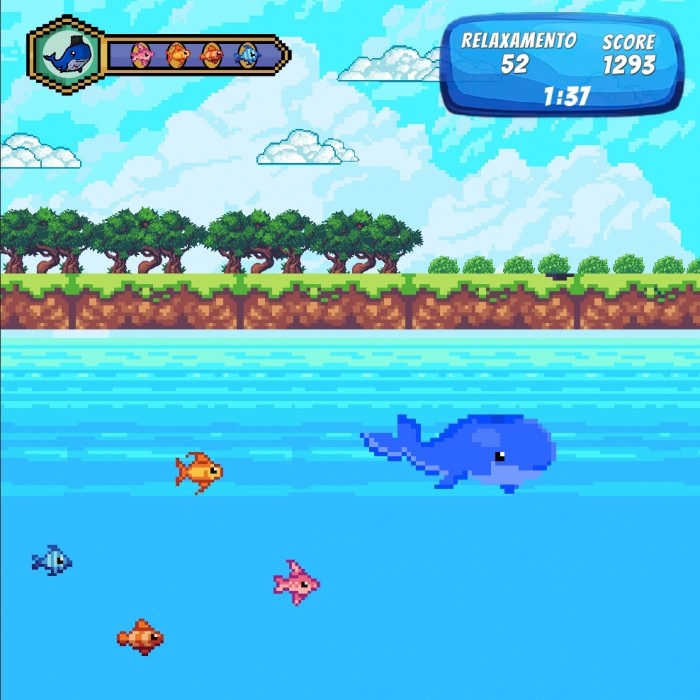
In one game, for example, the child breathes with a whale to learn the breathing pattern. Another game, considered the most challenging on the platform, features a crab that must organize objects in the correct order. “It’s really hard because you have to breathe, put the objects in the right place, and in the right order, all while the wind blows the trash away. There’s no point in getting worked up,” Gabriella explains. The challenge is suitable for children and adolescents and requires players to remain calm and breathe correctly, even under pressure. Each game lasts about three minutes, which is enough time to see results.
Although the platform was developed for children with ADHD, it also serves those with ASD and anxiety. The design takes into account the specific needs of this audience. Sounds, colors, and stimuli are designed for children with greater sensory sensitivity.
Therapists play a key role in the process. They plan sessions, choose appropriate games, and introduce sensors in a playful way. “They tell the child that they’re going to listen to their own heartbeat and that the whale needs help to calm down,” says the researcher.
The startup has created a path that begins with simpler games for children with ASD, who may become frustrated with certain challenges, and more stimulating games for children with ADHD, who may need this to maintain focus. Patient acceptance is usually good. Children with greater sensitivity may need more time to adapt.
Additionally, the company is concerned with children’s screen time. The platform should function like physical exercise: short, regular sessions yield better results than prolonged use. The recommendation is up to three three-minute sessions at home each day – just nine minutes total – and one session at the clinic, usually at the beginning or end of an appointment. “We recommend mindful use based on the therapist’s assessment,” Gabriella emphasizes. Use is recommended exclusively during the period of clinical follow-up and not independently by the family without professional supervision.
Beyond the screen
The goal of training with the system is to internalize the technique and apply it in everyday situations. Therapists who use the platform confirm that children begin using controlled breathing during stressful moments at school, such as before tests or during discussions with classmates. “After seeing that they can overcome challenges in the game, they realize that it’s good for them. Then, they start to use the technique in other situations.”
During each session, therapists can access detailed reports to track metrics such as sensor signals, game time, and performance. These reports can be shared with parents to demonstrate the child’s progress. The startup markets the solution to private clinics and independent therapists at a cost of BRL 9.90 per patient for the basic plan (for clinics that have compatible sensors) or BRL 49.90 when the startup provides the sensors.
Additionally, Self Intelligence for Life is seeking to operate in the public sector. Currently, in partnership with the São José dos Campos Health Department, the startup is testing the solution in a controlled environment (sandbox) so the city government can evaluate it. “We’re validating it with the public sector, both in health and education,” says Gabriella.
However, adapting the solution for the SUS will pose challenges. It is common for public structures to have computers with restricted network and Bluetooth connections. “Not everything fits perfectly: experimentation will be necessary to adapt the product,” acknowledges the researcher.
Outlook
The company recently participated in the Web Summit in Portugal. During the conference, it established important connections in the European market. Now, a partner therapist based in Portugal will present the solution there. “We have high expectations for taking the tool to other countries,” Gabriella reveals.
Other games are expected to be released periodically to expand the available skills. There are already options in development that focus on speech for children with phonetic difficulties and that use artificial intelligence for more advanced customization. The startup also plans to expand to other age groups. “We’re planning a version that’s less childish to serve other groups,” Gabriella highlights.
According to data presented by researchers at the University of São Paulo Medical School (FM-USP) in 2021, one in six children and adolescents worldwide has some form of mental disorder. In Brazil, among the 69 million people aged 0 to 19, 10.3 million cases have been recorded. As experts point out, child mental health is highly neglected – only a tiny portion has access to services.
In this context, Self Intelligence for Life could help make effective therapeutic techniques more accessible. Expanding into the SUS and international markets could transform how anxiety and emotions are addressed.